

Deep Traps and Even Deeper Dependencies? Lessons from Péter Magyar’s Countrywide Tour
Magyar is on a countrywide tour again, suspectedly to regain control of the political narrative following the recordings scandal. He is encountering the Hungarian reality of deep state dependencies.

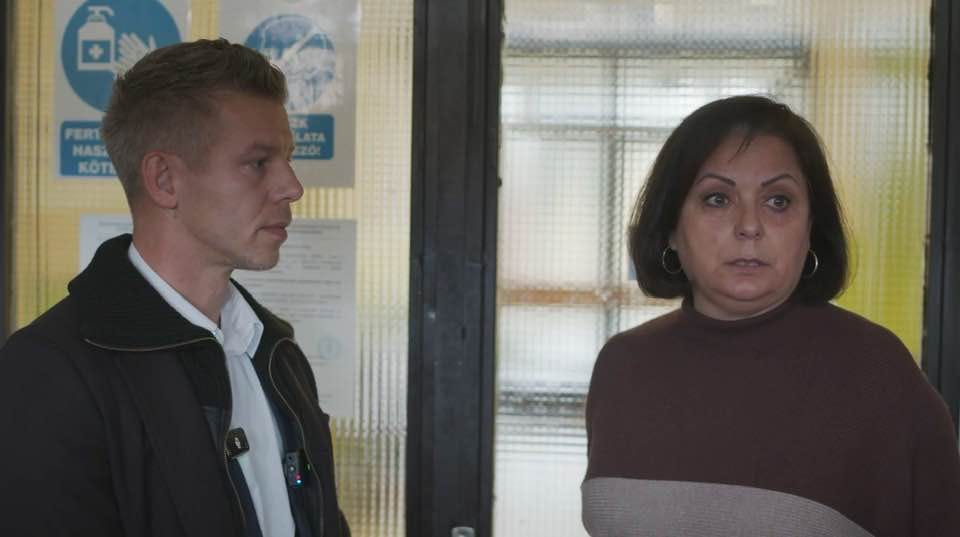
On November 20th, during this new tour, Péter Magyar visited a children’s home in Miskolc, Northeastern Hungary. He posted photos on social media of the facility’s poor conditions, including a mouldy, dilapidated bathroom, and commented that the home, as typical, housed more children than legally permitted. The post quickly sparked significant online reactions. Four days later, Magyar attempted to visit another children’s home in Nyírszőlős, this time bearing gifts, but was denied entry. That same day, the state secretary responsible for social care services within the Ministry of Interior posted a statement on Facebook, declaring that Magyar would no longer be permitted to visit such institutions.
At first glance, it’s surprising that Péter Magyar was even allowed into a children’s home and welcomed by the head of the Directorate-General for Social Affairs and Child Protection. It’s hard to imagine a high-profile visit by another opposition politician—such as Ferenc Gyurcsány—being similarly accommodated. After all, after 14.5 years of Fidesz rule, social institutions in Hungary understand the unwritten rules. They must take what they can get from Fidesz, and accommodate Fidesz’s wishes, providing photo opportunities or whatever else is asked of them. Most importantly, public criticism of the regime must be avoided at all costs, and facilitating the opposition to do so is unthinkable. This dynamic reflects the deep fusion of state and party, with exceptionally strong relationships of dependence between the central government and every level and type of state bureaucracy. Both local governments and social institutions are keenly aware of the "rules of the game".
But Veronika Cséplőné Gönczi, head of the Directorate-General for Social Affairs and Child Protection didn’t seem to follow the usual playbook in Miskolc. She allowed Péter Magyar to enter the children’s home, spoke with him, and even let him document the far-from-ideal conditions with a photograph. It’s hard to imagine she was unaware of Péter Magyar’s intentions. Could she simply have been an ardent supporter of Magyar? Or perhaps she saw him as Hungary’s political future and wanted to get in his good graces early?
Well, not exactly. According to Péter Magyar, it was a trap. Ms. Cséplőné forbade him from recording their conversation and did not allow his filming crew inside, while a member of her own entourage secretly recorded the entire meeting. As Magyar claims, a mere five minutes after their meeting, the recording was handed over to Fidesz and Fidesz-aligned media. The material was then used in an attempt to smear Magyar.
On the one hand, this story highlights Fidesz’s new strategy to counter Péter Magyar: setting traps at every turn and waiting for him to walk into them. This follows the release of numerous private recordings by his ex-girlfriend, as part of efforts to tarnish his character and increase psychological pressure.
Yet, the trap was fully ineffective. What resonated with the public is not the smear attempts but Magyar drawing attention to the crisis in social services and the poor state of public goods. It was particularly naïve of Fidesz (or maybe just Ms. Cséplőné if she acted without central guidance) to think they could use the issue of children’s homes to discredit him. After all, Magyar’s political rise was rooted in a scandal involving the Fidesz pardoning of a man who covered up abuse in a children’s home. Moreover, Péter Magyar is uncannily good at turning such relatively weak attempts to smear him into his own, far more resonant narratives. Even more damaging recordings released to tarnish his image in the past have so far failed to significantly dent his support.
On the other hand, the most important lesson from this story for me is this: the relationships of dependence on Fidesz run deep. Those in positions of power within the state and economy, bound by these dependencies, still have not faltered in their proactive support of the regime. They have skin in the game, and they seem committed to doiong their bit protecting the status quo as long as they see Fidesz’s continuity as the most likely future path. And no one is deserting the ship yet - everyone continues to play their assigned roles within the Fidesz machinery as expected.
The lesson is clear: while there is popular zeal for regime change, countering such entrenched dominance is a monumental task. Such stories clearly demonstrate that Fidesz is not just a governing party in a democracy—it’s a far more formidable opponent. The battle ahead for Péter Magyar and his Tisza Party is uniquely challenging.
Hanna Fölsz
Correct summary of the last days of the political game in Hungary, and the deep rooted feudalistic situation after 14 years of ruthless Fidesz rule.
So far Peter Magyar managed to escape from the smear efforts without wounded in a serious way. In one and a half year parliamentary elections will show if Orbán's illiberal dictatorship stays afloat, or sinks like the Titanic.