

Historical Hungarian Daddy Issues - Orphan (2025) Review
If you want to understand the Hungarian government's policy on Ukraine, you should look at 1957, not 1956. - writes Ábel Bede in his review of László Nemes’ Orphan.


After a seven-year hiatus, László Nemes, the director of Hungary’s most recent Oscar-winning feature film, Son of Saul (2015), is back. His latest film, Orphan, is set in the spring of 1957 and centres Andor, a young Jewish boy living with his single mother, Klára. The boy spends his time obsessing with the Hungarian national football team, hanging out with his close friend Sári, and having conversations with a boiler who he imagines to be his late father; a successful Jewish businessman who died in the Holocaust. Andor idealises the man despite never meeting him. One day, Berend, a brutish butcher from Jászberény, appears at the family’s Budapest flat and reveals that he is Andor’s real dad.
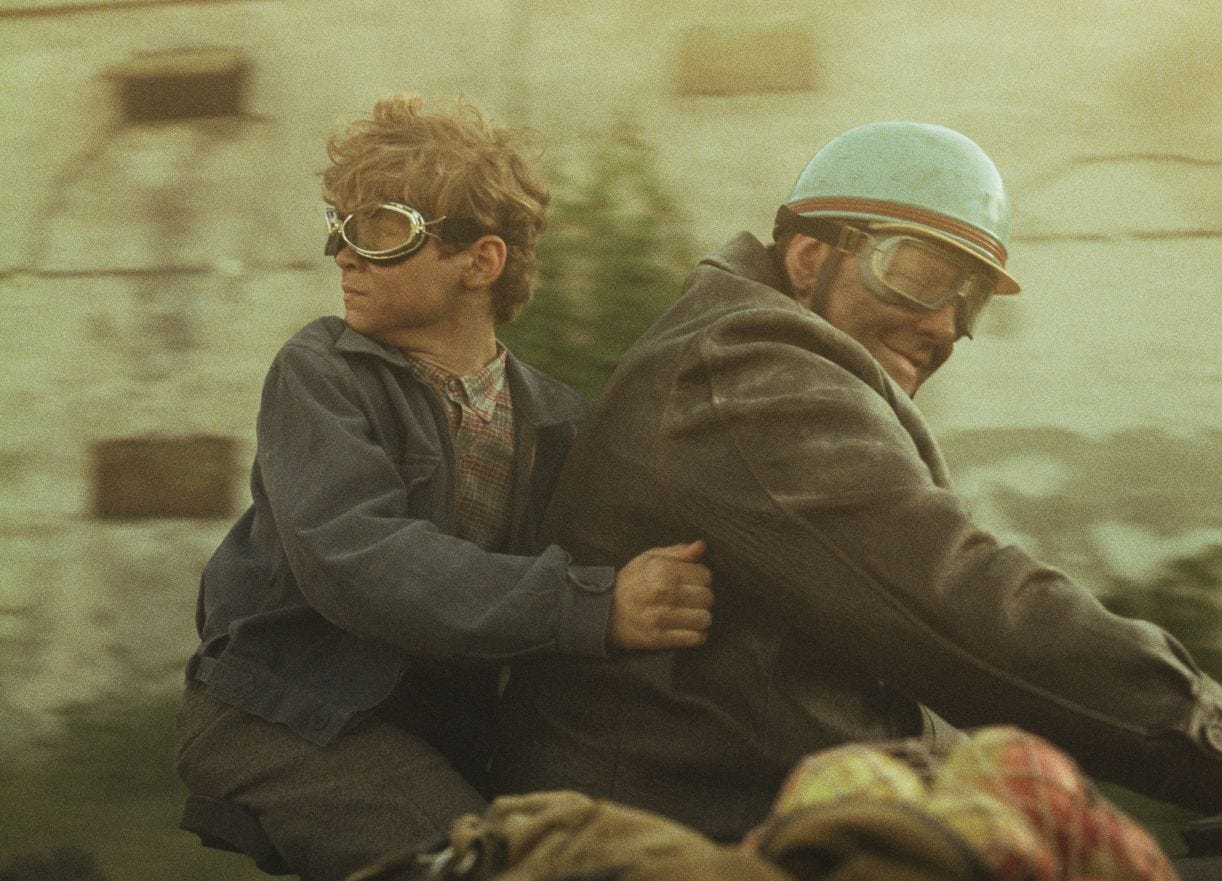
Orphan is significantly more dialogue-heavy, and therefore more accessible, than Nemes’ previous films, Son of Saul and Sunset (2018). Some key performances stand out in the film, such as the two child actors Barabás Bojtorán as Andor and Elíz Szabó as Sári, and most notably Grégory Gadebois as Berend. The latter’s physicality also contributes significantly to his performance. Gadebois’s work is particularly impressive as, despite being French, he plays a character symbolising the Hungarian nation.
Casting a foreign actor and later dubbing them is not the only thing that echoes the director of Hungary’s other Best Foreign-Language film winner, István Szabó. Orphan’s plot bears similarities to Szabó’s Father (1966), a film about the post-war generation of Hungarians (many of whom never knew their parents), depicting a young man who imagines his father as a figure of heroic deeds.
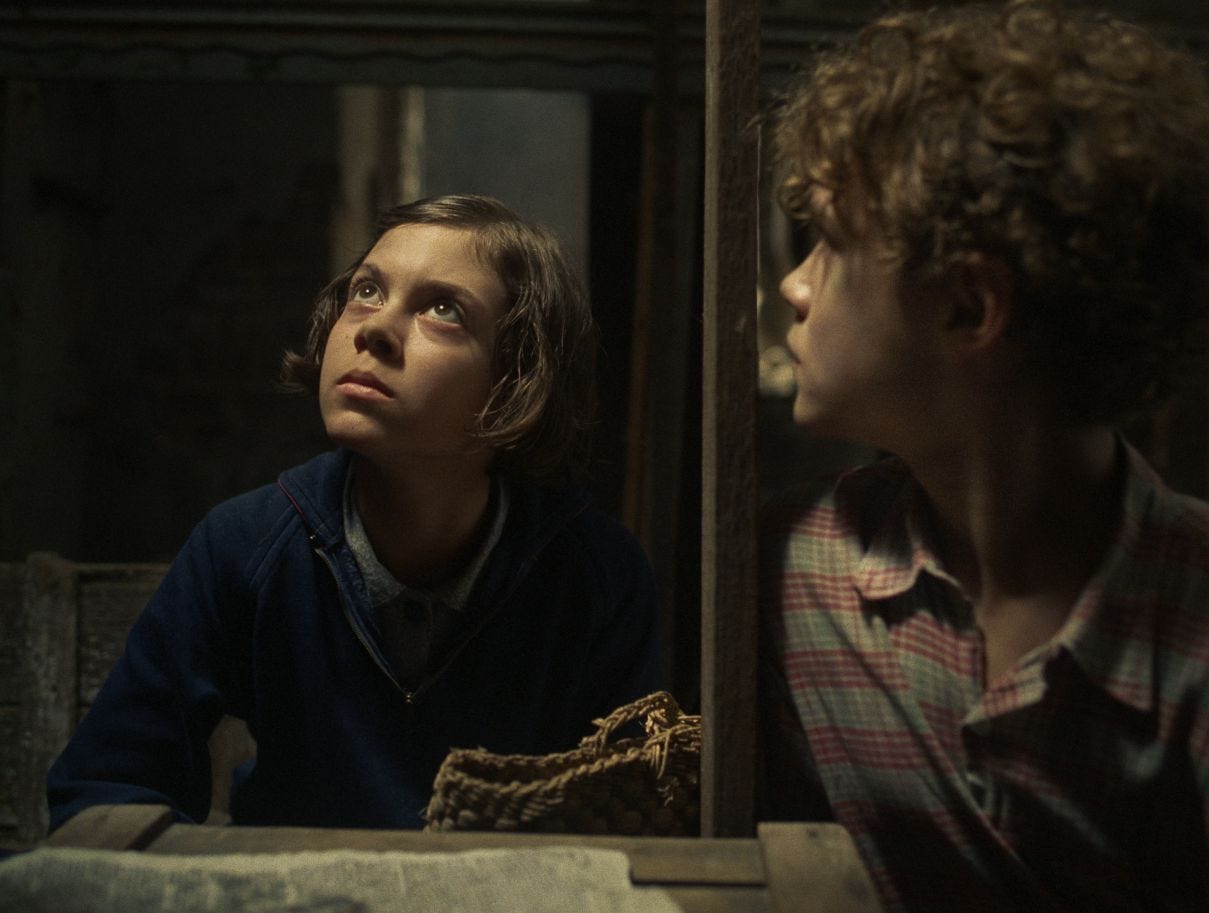
Orphan is loosely based on Nemes’ own family history. As such, the film is more personal than the directors’ previous films. Andor’s exploration of his Jewish identity through his mother, his idealised father, and the family of Sári is a theme and a worthy coming-of-age tale in itself. However, upon closer examination, Orphan also explores grander historical themes, just like Nemes’ previous films. Son of Saul offered an innovative way to talk about the Holocaust, solving a decades-long moral dilemma about its depiction. Less highly regarded, Sunset explored the societal tensions of the fin-de-siècle Hungary and argued that the roots of the 20th century’s horrors were already present there.
Orphan draws a parallel between Andor’s coming-of-age story and his search for identity and the Hungarian 1 May celebrations of 1957, the eve of which the film climaxes. The May Day preparations and the failed 1956 revolution loom over the whole film. Local businesses and councils are preparing for the event, and there is an increased police presence. Sári’s brother, a participant of the revolution, is hiding underground from the police, and a lot of characters are contemplating emigration. Additionally, initial advertising campaigns for Orphan only used real and fake footage of May Day 1957 to promote the film.
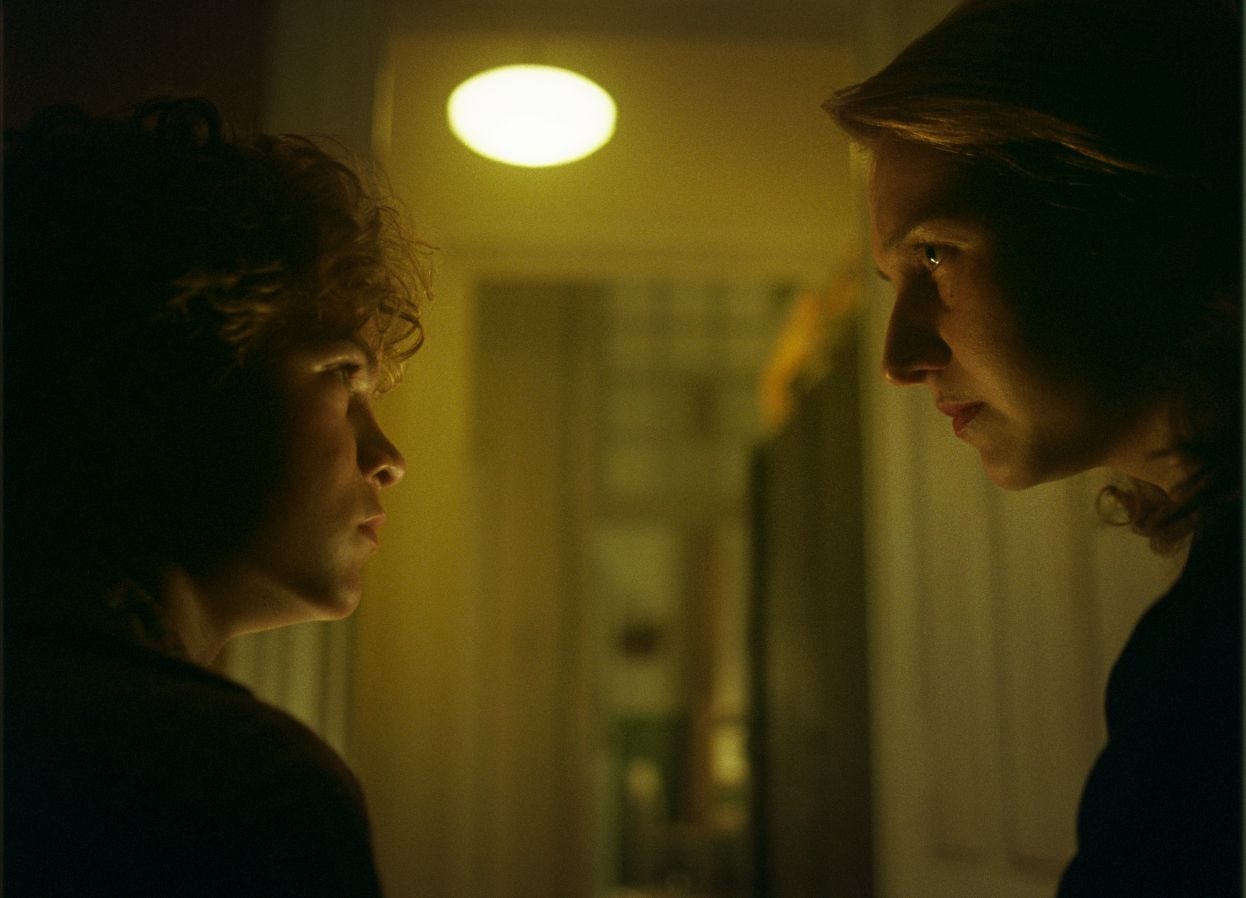
But what is the significance of 1 May 1957 in Hungary? Half a year after the crushed revolution, the new regime, led by János Kádár, organised its first major show of strength. The May Day celebrations that year also coincided with the launch of the Hungarian National Television. As such, the government knew its show of force had to be spectacular. It was.
With attendance compulsory for party members, who were told to bring at least one extra person with them, the rally attracted hundreds of thousands of people (a figure of 400.000 is often quoted, which is realistic based on the images but might be slightly exaggerated for propaganda purposes) to Budapest’s Heroes Square. Kádár’s first May Day also introduced the trend-setter selection of beer and sausages, foreshadowing the regime’s offer of goulash communism to the population.
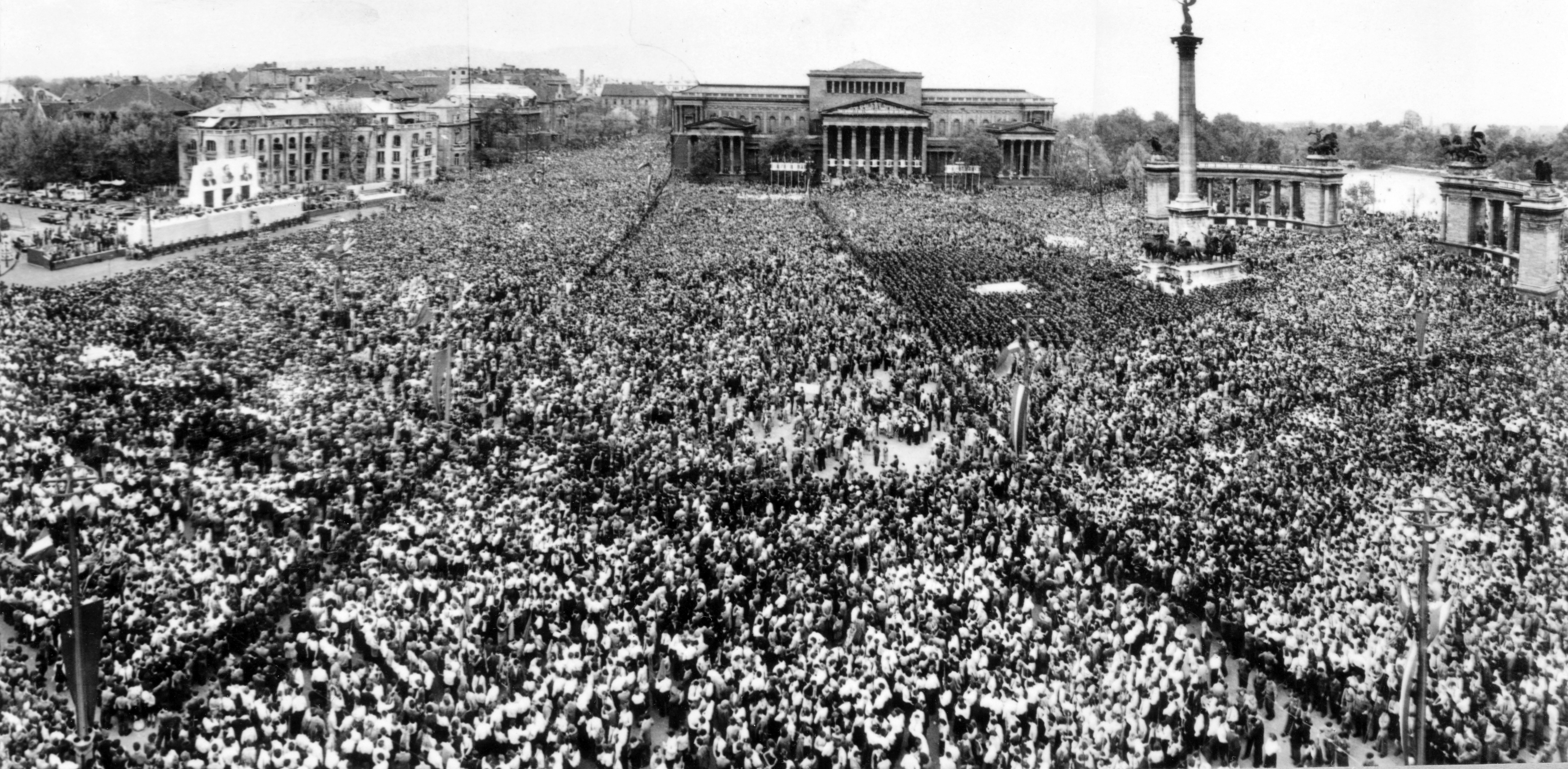
The scale of the event proved that Kádár succeeded. On what in many ways is one of the most shameful days in Hungarian history, the hundreds of thousands of attendees applauded Hungary’s new leader as he celebrated the crushing of the “counter revolution” and announced the building of socialist Hungary. The crowd then proceeded to sing the Internationale and chant “Long live the party!”
As the historian János M. Rainer noted, this all transpired as the regime’s retaliation against the participants of the revolution through imprisonment had already begun in early 1957. In the first half of the year, the general population also realised that, unlike under the Stalinist Mátyás Rákosi, they would not have to be enthusiastic believers of the system as long as they did not agitate against it directly. These two factors, resulting in what the historian Miklós Szabó called the “capitulation” of Hungarian society, contributed to the spectacular birth of the Kádár compromise.
While the demands of the 1956 revolution are considered to be the birth of modern Hungary since 1989, and there is a national consensus in its appraisal among the intelligentsia, the legacy of 1 May still lingers in the Hungarian population. In the 2022 election campaign, which coincided with the outbreak of the war in Ukraine, some advisers allegedly cautioned then-leader of the opposition Péter Márki-Zay from embracing a Russia-hawk position. They argued that what the Hungarian population learnt from 1956 was to be scared of the Russians as resistance is hopeless, rather than to pick up the fight heroically. Márki-Zay did not heed this advice, and the outcome is well known.
In contrast, such argumentation is often expressed implicitly by Fidesz politicians regarding the war and how conflict with Russia must be avoided. This cautionary attitude remains present despite the fact that in 2024, Balázs Orbán, a member of the government, caused a national scandal and was forced to apologise for tying similar argumentations explicitly to 1956.
By setting his film against the backdrop of 1 May 1957, László Nemes draws parallels between Andor’s search for his father and Hungarian society’s reckoning with its true self. Andor thought that his father was a hero, only for him to realise he is merely an ordinary, brutal butcher. Similarly, Hungarian society thought their true face was their heroic freedom fighters rising up against Soviet occupation, but it turns out it may be the masses who celebrated the revolution’s oppressor.
But Andor should not forget that the values he attributed to his imagined father are nevertheless present in himself and those around him; he is both the child of his father and his Jewish mother and is the quasi-sibling of his de facto sister Sári who actively helped to hide a revolutionary. They are all stuck together in a Ferris wheel in Russia’s orbit despite none of them wanting to be there or near each other.
Will the members of this family ever learn how to coexist? Don’t hold your breath.
Orphan is playing in some Hungarian theatres with English subtitles. The film will premiere in France on 11 March.
Ábel Bede
 | A guest post by
|
"what the Hungarian population learnt from 1956 was to be scared of the Russians as resistance is hopeless"
This is so true. It was a very bitter pill to see how so many Hungarians instinctively seeked to appease the aggressor in 2022
I really enjoyed the article and explanation of the context for the film, despite being less moved/impressed by the film itself. The film, however, is beautifully filmed & the set design was really good.