

Orbán’s Foreign Policy Balancing Act
In a world of great-power competition and tensions between Europe and Trump’s America, Orbán continues his foreign policy balancing act, writes Gabriela Greilinger


Three days into the new year 2026, the world woke up to the news that the Trump administration had launched an attack on Venezuela, captured President Maduro and taken him out of the country.
While leaders across Europe have expressed concern about the situation in Venezuela and called for de-escalation, observers have noted the Hungarian government’s silence on the matter. Also, the official statement in the name of the EU by its High Representative, Kaja Kallas, has been supported by all member states, except Hungary.
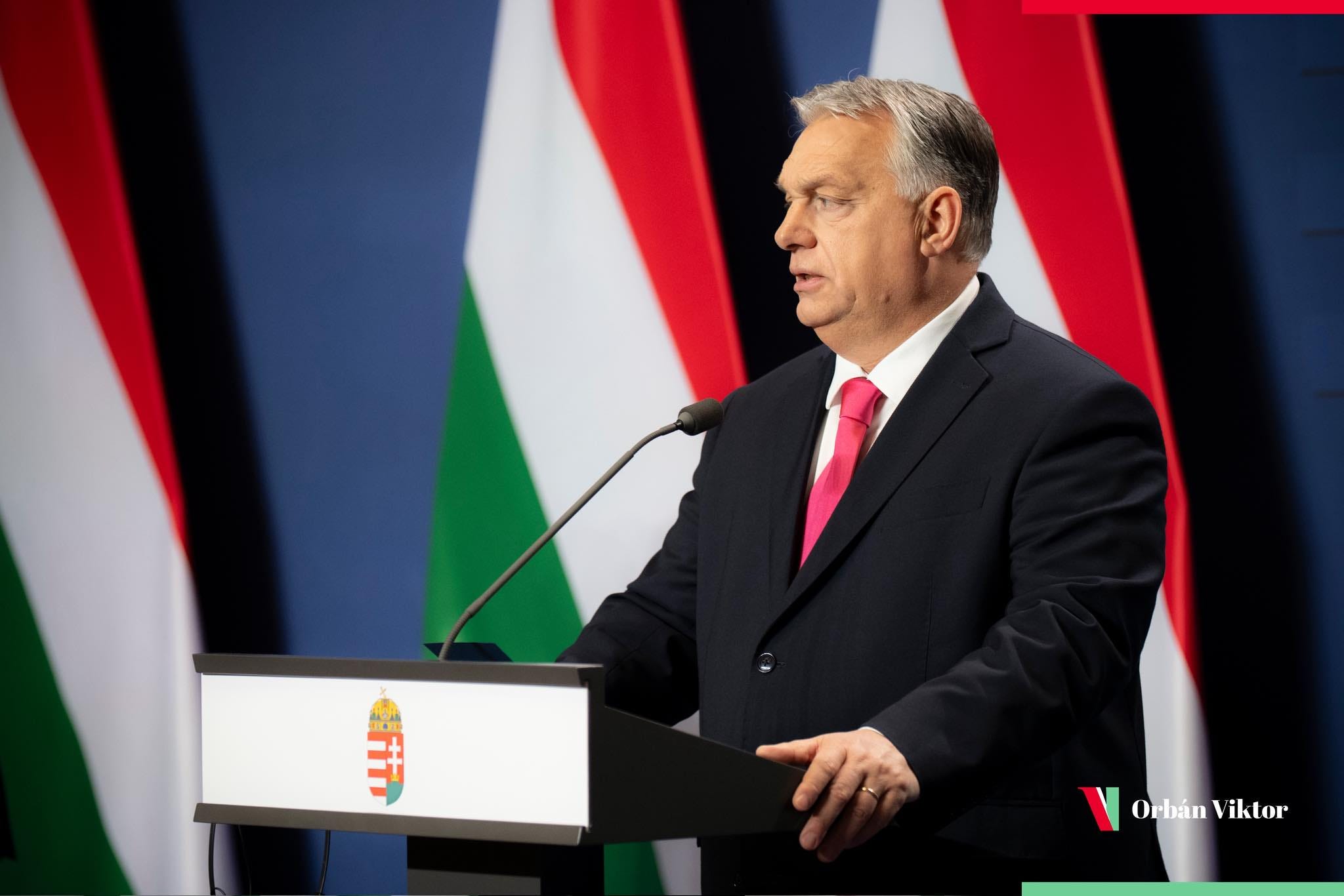
For ardent followers of Hungarian politics and the Orbán regime’s relationship with the EU and handling of EU affairs, this should come as no surprise, however. It is not the first time Orbán’s Hungary has gone its own way and not supported EU foreign policy proclamations. Just remember the countless times Orbán has obstructed action on Ukraine, using blackmail and threatening to veto important decisions.
Despite politicians around the world expressing their distress and concerns following the attack, Orbán’s initial silence on Venezuela is not particularly surprising. As with most diplomatically delicate matters where the government’s stance could prove controversial, it needed time to find the right narrative to address it. Clearly, as supporters of Trump who praise everything he does and whose ideology aligns with the commander-in-chief, the Hungarian government usually commends any actions taken by the U.S. administration.
However, the act was widely deemed illegal under international law and has been globally condemned even by other European far-right politicians such as Marine Le Pen. Overall, it does not align well with the “pro-peace” stance the government is propagating in the run-up to the 2026 elections. Hence, openly supporting the U.S. attack could be interpreted as hypocritical and contradicting Fidesz’s usual line.
Finally, on 5 January, Orbán posted a statement on X referencing the U.S.’s capture of Maduro by stating that “We’re not in the business of issuing global moral verdicts. However, you can be sure that Hungary will not mourn the fall of a narco state. Our interests lie in what is good for our people: less drugs in the global market and lower energy costs. Prosperity for Venezuelans is good for us too.” On his Facebook page, which Hungarians are more likely to follow and where he communicates in Hungarian rather than English (as he does on X), he shared only a short video captioned: “The fall of every narco-state is good news.”
Both posts remained vague, and neither mentioned the U.S. as the perpetrator, nor that the head of state of another country was captured illegally. Instead, Orbán perpetuated Trump’s narrative and justification for the attack on Venezuela, namely, Maduro’s alleged involvement in narco-terrorism and drug trafficking.
Clearly, the Hungarian government aimed to come across as a somewhat “neutral, politically unaligned bystander and chose to focus on the drug-related charges, a stance consistent with the Orbán government’s zero-tolerance policy on drug trafficking, presented as “child protection” to maintain the image of a family-friendly nation. Similarly, by suggesting that the act will reduce oil prices, they seek to emphasise the potential benefit for Hungary, which continues to struggle with high energy prices. Consequently, they aim to comfort Hungarians suffering under current economic conditions and concerned about high energy bills for another winter due to Russia’s war in Ukraine.
It is also worth noting that the Hungarian foreign minister, Péter Szijjártó, accompanied by representatives of the Hungarian oil company MOL, travelled to Caracas in 2023 and met Maduro and his Minister of Oil, citing changing global circumstances. Notably, the post also stated that they agreed that “the primary responsibility of elected leaders is to preserve the sovereignty of their countries and resist attempts at external intervention”, a statement that would now cast a critical light on the U.S. administration’s unlawful intervention in Venezuela in early January 2026.
As the foreign minister stated in another remark: “(…) we decided to rebuild our relations and cooperation with Venezuela, and we will do this quickly, among the first, so that we can benefit as much as possible from it.” Thus, the changing circumstances that Szijjártó alluded to in his 2023 post likely referred to the Fidesz government’s hopes that sanctions against Venezuela would be lifted soon and that Hungary could start profiting from the country’s massive oil reserves.
The statement further highlights the underlying ideology, or rather the absence thereof, in Fidesz’s foreign policy and provides insight into the remarkable balancing act the Hungarian government is performing in its international relations. For Orbán, this balancing act has perhaps less to do with obstructing the normative ideals the EU stands for, but rather with pursuing a self-centred foreign policy that ensures prosperity and respect not for Hungary but for the Orbán regime.
Shying away from making clear and meaningful commitments on an ideological basis, Orbán’s foreign policy mainly aims to benefit himself and his cronies. Another representative example of this is the so-called “Eastern Opening” policy pursued by the government since 2011, under which Fidesz has built relationships with Russia, China, and Central Asian states, despite the at times strained relations between these states and the EU, due to a lack of respect for human rights and democratic principles.
By avoiding clear ideological commitments and attempting to remain a somewhat “neutral” actor on the global stage that emphasises self-interest over allyship, Hungary tries to simultaneously negotiate and foster relationships with China, Russia, Turkey, and the U.S. Meanwhile, Hungary’s core alignment with the EU as a member state poses a challenge to the country’s foreign policy, given the bloc’s at least rhetorical commitment to liberal norms, democracy, and its aspired role as a normative actor on the global stage.
This behaviour is now particularly concerning, given the U.S.’s current leadership by a president who is antagonistic towards the EU and has not only mused about taking over Greenland, a territory that belongs to a fellow EU member state, Denmark, but later doubled down on earlier statements and emphasised that America needs to “own Greenland”.
Under such circumstances, presenting a united front is more vital than ever for the EU. Yet, with the Orbán government steering the country’s foreign policy according to its own principles and seeking relations with illiberal actors worldwide, it is unlikely that Hungary would rise to the occasion and align itself with its fellow EU member states. Instead, the country will continue to undermine common EU positions and go its own way. At this point, the only thing that can bring Hungary back into the EU fold and turn it once again into a reliable ally is new leadership.
Gabriela Greilinger
 | A guest post by
|