

Showdown in Strasbourg
Viktor Orbán’s presentation of the Hungarian Council Presidency programme exposed the deep rifts between the EU and the Orbán government once more.

After the initial date for Orbán’s appearance in the European Parliament was postponed due to the flooding in Central Europe that severely affected Hungary, he finally held his long-awaited speech on October 9, when he presented the country’s program for the EU Council presidency, which Hungary currently holds since August 1st until the end of the year.
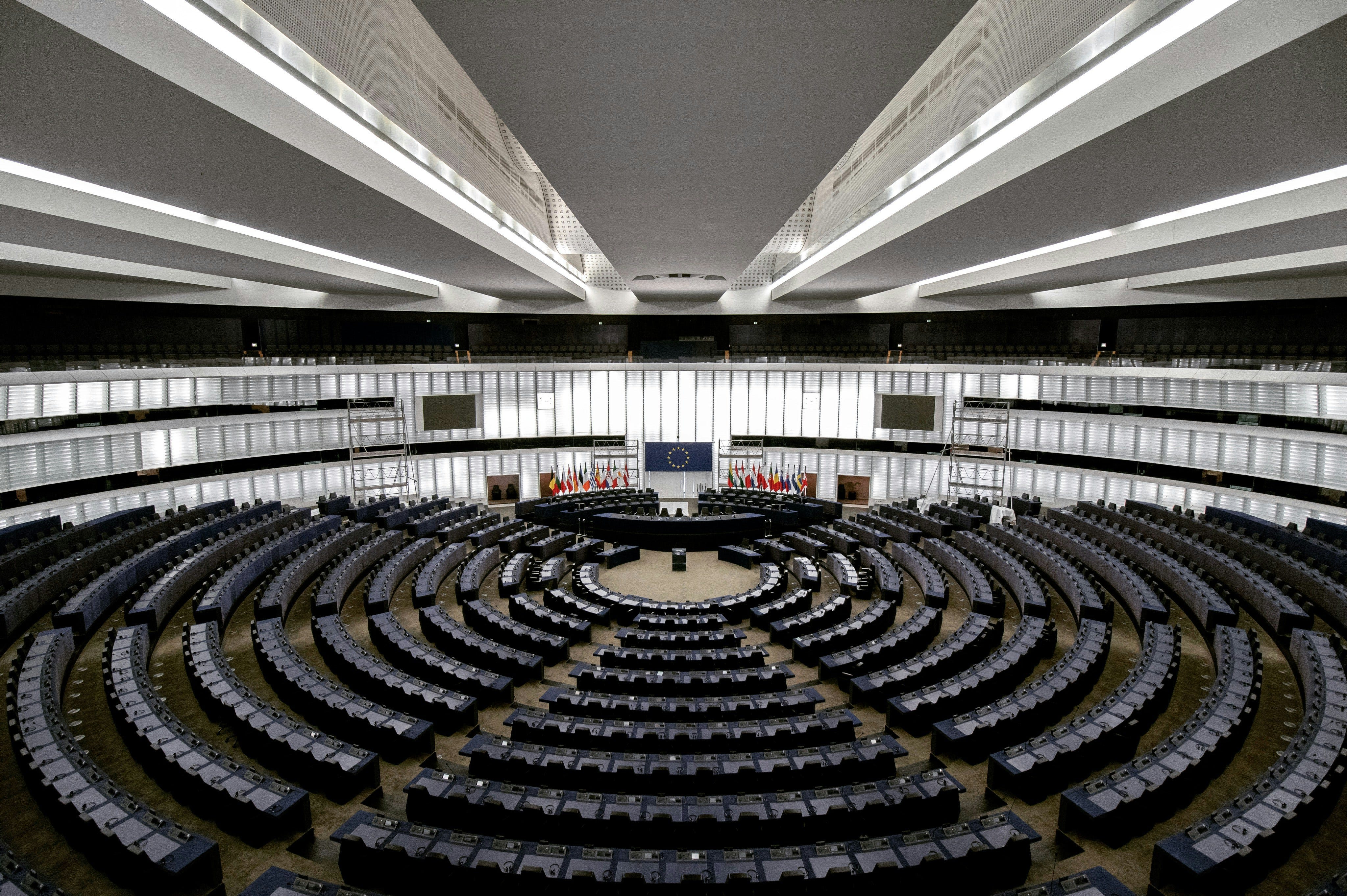
From the beginning, the Hungarian EU presidency was surrounded by controversies, as members of the European Parliament initially tried to stop Hungary from assuming it due to the government’s illiberal and anti-European course. Then, during the presidency’s first weeks, Orbán made headlines posing as “Council President” and taking trips in the name of “peace” to Russia, Türkiye, Ukraine and a meeting with Donald Trump in Mar-a-Lago.
Orbán’s speech and programme contained everything one would expect. He railed against the green transition, went on and on about competitiveness, and, most importantly, raised the issue of immigration in his typical nativist fashion and in line with his familialist policies, stating that migration does not compensate for the decline in European populations.
Moreover, he referred to the ‘migration crisis’ as a significant burden, especially for EU states on the external border, like Hungary, and argued in favour of more meaningful support for these member states ¬– thus, effectively calling for the EU to provide more financial support to countries like Hungary who have to secure the bloc’s outer borders.
Finally, Orbán advocated for external hotspots, in line with what his far-right colleague in Italy, Giorgia Meloni, is doing now through the controversial Italy-Albania deal. Under the scheme, immigrants are deported to centres in Albania to wait there for processing, a practice already under challenge after an Italian court deemed it illegal. He further mentioned the need for the possibility of opt-outs on migration for member states, in line with the Dutch PVV party that sits in the Patriots for Europe fraction with Fidesz and which just recently asked for an opt-out on migration matters.
Most interesting considering Fidesz’s campaigning and policy, Orbán lastly also connected the topic of immigration to homophobia, antisemitism and violence against women. This is a common practice of far-right actors, known in the literature as homonationalism, judeonationalism and femonationalism. The basic idea is to argue that values such as LGBT+ rights, women’s rights and the protection of Jews in “the West” are under threat due to immigration from “foreign, violent cultures”, specifically trying to make the association with Muslim men.
However, while in line with his far-right ideology, Orbán making this connection is all the more interesting considering the government’s fair amount of antisemitism in their political campaigning over the years, their blatant homophobia as exemplified by their ill-named “child protection” laws implemented, along with the fact that Hungary has signed yet still not ratified the Council of Europe Convention on preventing and combating violence against women and domestic violence (also known as Istanbul Convention). Given these realities, Orbán insinuating that LGBT+ rights, women’s rights and the protection of Jews are under threat from (Muslim) immigration should be considered hypocritical at best.
Towards the end of the prime minister’s laundry list of an EU presidency programme, Orbán also discussed EU enlargement, presenting it as a key topic of the Hungarian presidency. He reiterated previous calls for the need to accelerate the accession of Western Balkans and mentioned a particular focus on Serbia due to it supposedly being economically, security-wise and geopolitically advantageous. According to Orbán, without Serbia joining the bloc, the Balkans cannot be stabilized and will remain unstable. While giving no explanation why Serbia’s accession to the EU would be of particular importance, in light of Orbán’s cosying up to Vučić and their ideological proximity, it is likely that Orbán considers Serbia’s accession an opportunity to have a new allied government in the EU, particularly the EU council, after losing Poland’s PiS.
Orbán’s “presentation” was followed by a 15-minute-long response by Commission president Ursula von der Leyen, who had little to say about the content of the Hungarian presidency programme but instead responded with a fierce speech, laying out the hypocrisy between Fidesz’s rhetoric and behaviour specifically on Russia and the war in Ukraine. She started by referring to “some” who still blame the war in Ukraine “not on the invader, but the invaded” and those who “do not blame this war on Putin’s lust for power but on Ukraine’s thirst for freedom”, thereby indirectly pointing to Orbán’s often reiterated narrative on the war in Ukraine and victim-blaming. She followed up by saying she would like to ask them:
“Would they ever blame the Hungarians for the soviet invasion in 1956?
Would they ever blame the Czechs or Slovaks for the soviet repression of 1968
Would they ever blame the Lithuanians for the Soviet crackdown of 1991?”
Obviously, these questions struck a chord, given the significance of the 1956 invasion in Hungarian history and how it is often referenced by the Fidesz government itself, comparing its fight against the Soviets to its “fight” against the EU bureaucracy.
Further, she questioned the government’s claims about “sovereignty” given the recent news about Hungary handing out work permits to Russia, a policy deemed as a security risk for the entire EU, and Hungary’s decision to let Chinese police officers patrol the streets of Budapest, another potential security risk.
After von der Leyen’s response, others followed. Most importantly, Orbán’s main and most dangerous challenger, Péter Magyar, who secured a seat in the European Parliament after the June elections and whose Tisza party is getting increasingly close to the ruling party according to the latest polls, also held a 5-minute speech. He likewise did not respond to the presidency’s programme but instead used the opportunity to publicly point out the government’s corruption and the dire state of the country’s transportation, health and economic situation.
In the end, Orbán responded to the comments in expected fashion: He claimed that he came to present his programme for the presidency but was instead “attacked”, presenting the MEPs’ comments as “political intifada” and alleging bias against Hungary – even though the comments were only directed against him and his government. Moreover, he fought back, picking specific points to respond to and using rhetorical tricks, trolling, and strawmen’s arguments to defend his government’s policies. For example, regarding Russian workers and work permits in Hungary, he compared the alleged 3000 work permits that were issued for Russians this year and the total 7000 Russian workers in Hungary to 300.000 in Germany, 100.000 in Spain and 60.000 in France.
He obviously either did not or did not want to understand that the problem was not the amount of work permits Hungary issues to Russians but how Hungary suddenly eased immigration rules for Russians, thereby raising fears among other EU member states over potential espionage – particularly in light of Fidesz’s perceived closeness to Russia and other illiberal actors.
Overall, if anything, Orbán’s appearance in the European Parliament showed one thing clearly: Outside of his “Patriots for Europe” group, he is ostracised, his politics and behaviour disrespected. Certainly, the mood shifted since Orbán as prime minister last held the Hungarian EU Council presidency in 2011. Even the EPP, his former European political home, finally got the memo: For Viktor Orbán, it’s time to go.
Gabriela Greilinger