

The Surfer and the Waves
Ábel Bede discusses the reasons behind the rise of Péter Magyar, with reports from Tisza rallies in County Békés and County Pest.


The opposition are the favourites to win the general election on Sunday. Not many would have believed this statement four years ago, when the United Opposition, led by Péter Márki-Zay, faced a crushing defeat at the polls. Some were sceptical that anyone would ever be able to make such a statement with confidence in Orbán’s Hungary.
So what happened? Why are Péter Magyar and Tisza, a party that did not even exist in 2022, at the cusp of victory?
The main cause of Magyar’s rise is no doubt outside his control: the state of the Hungarian economy. In part due to the suspension of EU funds (officially enacted due to Orbán’s rule of law violations, unofficially likely due to his Russia policy), in part due to geopolitical issues, and in part due to the structural problems arising from Orbán’s system favouring loyalty over competence, the economy has not moved an inch over the past four years. In this election cycle, Hungarians have also faced significant inflationary pressures, even more so than residents in other countries in Europe. At its peak, in 2023, inflation was 23%(!). Thus, Orbán’s usual strategy of posing as a defender of Hungarians against an outside threat is no longer working.
Previously, Hungarian voters seemed unwilling to risk losing what they already had, even if it would have meant a possibility of increasing their wealth. In the current state of the economy, however, they now feel their situation can’t realistically get much worse. This, first, led to the rural middle class’ turn away from Fidesz and towards Magyar. In the past few months, the lower-middle and working-class communities also seem to have started to break.
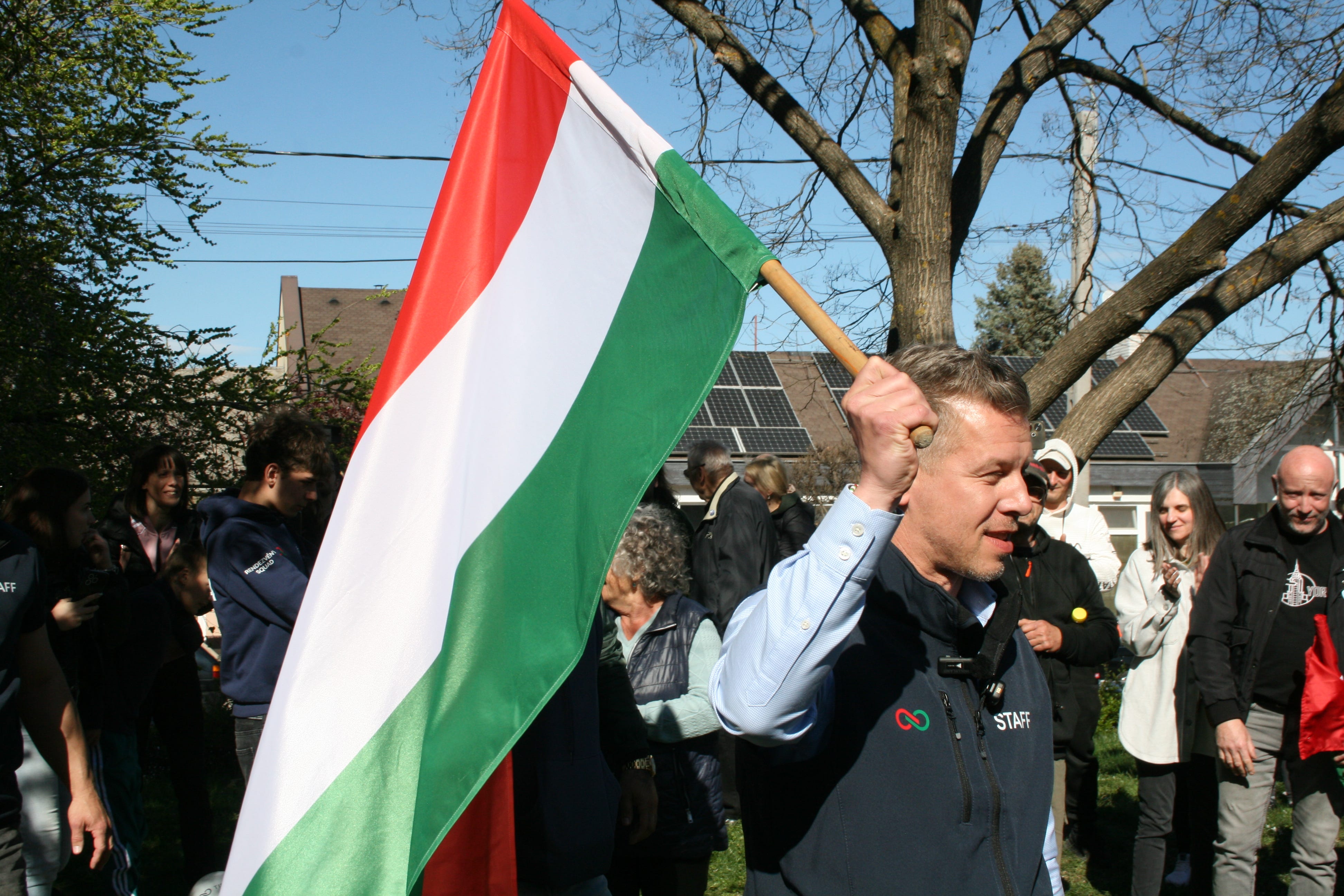
The economic crisis would not be enough in itself, of course. Magyar is a shrewd politician who does not walk into traps that the previous opposition routinely did. He is also able to appeal to nationalistic-minded Hungarians much more authentically than his predecessors. His historical references, tendency to recite well-known poems from the Hungarian literary canon, the plethora of Hungarian flags at his rallies, the frequent use of folk songs, and his famous Attila suit are fine examples of this.
Moreover, he is much less of a reactive politician than his predecessors were. In his football-themed biography of Viktor Orbán, the Hungarian journalist Pál Dániel Rényi outlined how Orbán’s football teams, similarly to his political party, were always on the front foot and tried to dominate their opponents.
He also suggested that they have never really been good on the defence, alluding to the idea that perhaps, politically, Orbán is also vulnerable when he is not in control of “the game.” Magyar’s success seems to confirm this theory. Over the past two years, he was the one setting the agenda. He talked about his own topics, primarily bread-and-butter issues and the dire condition of Hungarian state institutions, often forcing Orbán into a defensive position.
The fact that he has been able to do this no doubt correlates with the cost-of-living crisis. The clemency scandal, which sparked his appearance, is also a factor. In February 2024, when the whole country was desperate to find out new information about the background and developing story of Katalin Novák’s pardon for a paedophile accomplice, pro-government news outlets remained in conspicuous silence, and the readership of independent media grew exponentially. Even Fidesz voters knew which outlets to turn to if they wanted more information. It is perfectly feasible that those who found these outlets at the time remained regular readers and were thus exposed to more government-related scandals.
What’s even more important than the traditional media is the way Magyar presents himself. Magyar is a celebrity first, politician second. He burst onto the scene as an insider who spills inside secrets from Fidesz on live TV. The information he revealed contained significant “gossip value” and was presented in a sensationalised manner.
Ever since the breakout of the clemency scandal, Hungarian political life has become a tabloid dreamland: a paedophile scandal, pardoning of someone with significant elite connections, and the pardoning being done at the urging of a bishop who the Hungarian press claims had influence over the President due to their “extremely close personal relationship.” The events of the final two weeks of the campaign, spy games and further revelations from insider figures from the police, the military, or the Hungarian Competition Authority, are a worthy season finale.
Magyar’s personal life is tabloid-friendly too: his divorce from a Fidesz minister, his impulsive shenanigans in Hungarian nightclubs, a stormy affair with a woman who turned out to be working for the Hungarian secret services wanting to sabotage Tisza, give plenty of ammunition for political gossip. Magyar utilises his celebrity image himself, too. On his Facebook page, Magyar regularly posts pictures and videos of himself cooking, getting a haircut, lifting a meerkat, or even going through a breakup. His team made a documentary about him, which received three million views over a weekend. Two books have already been written about him. Magyar’s revolution is not only televised. It is the primetime TV show in the country.
But his celebrity status is not only confined to virtual spaces. It is apparent from his campaign tour as well.
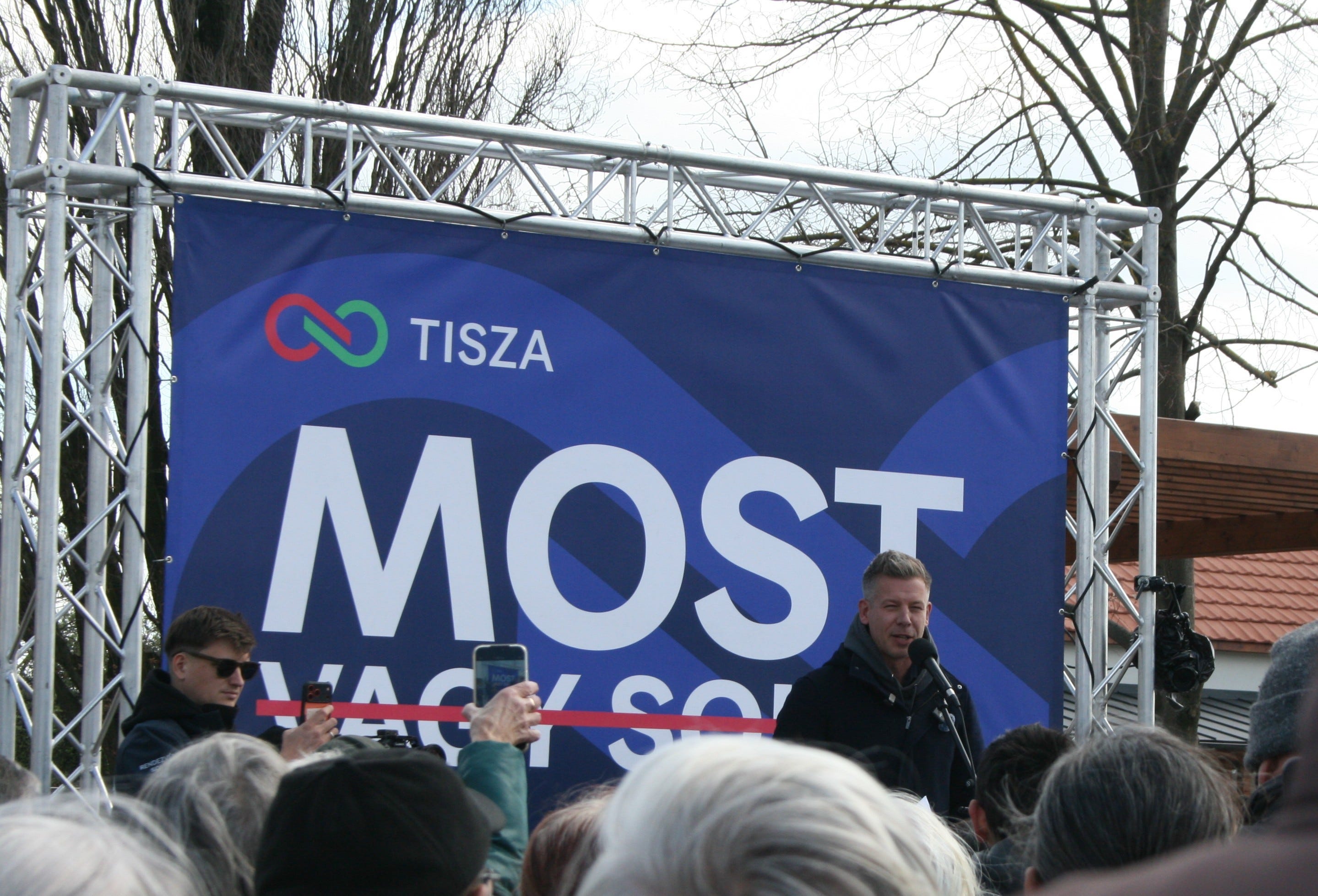
Péter Magyar arrives carrying a large Hungarian flag. As he walks towards the stage, his theme song, Te kit választanál (Who would you choose?) from the 1980s hit rock opera István, a Király, is playing in the background. Magyar smiles and shakes everyone’s hand. Soon after he reaches the stage, the crowd starts chanting Árad a Tisza! (the Tisza is flooding), the party’s motto. This, or a similar choreography, repeats itself in Dévaványa in one of the poorest regions in the country, Cegléd, a historic stronghold of the Hungarian right, and in the idyllic town of Vác in Budapest’s commuter belt.
At the rallies, Magyar always focuses on cost-of-living issues. In the poverty-stricken Békés county, he makes sure to blend the grotesque enrichment of Fidesz-aligned oligarchs into his speeches, while in the commuter areas of Gyömrő and Vác, he tells jokes about the state of the railways. Magyar and his local candidate also regularly name-check the local hospitals and discuss their dire condition in anger.
Despite Magyar’s celebrity status and his embrace of ‘rockstar nationalism’, most people, even among his activists or supporters who are enthusiastic enough to attend his rallies, do not seem to be there because they like Magyar himself. One expects such an attitude from forever-opposition-aligned Budapest progressives. However, it is consistently true for Magyar-rally-goers in the countryside, too.
Take the example of a former Fidesz voter who attended Magyar’s rally at Békéscsaba. He is now so disillusioned with Orbán that he attended his rally in the same city a few days earlier as a counter-protester. He said that he thought it was even possible that with Magyar, things would get even worse. “But at the moment, Hungary is like a man floating in the middle of the Ocean. You have to start swimming in one direction. You might swim further away from the shore and drown. But you have to start swimming because if you don’t, you’ll drown for sure” - he told the Hungarian Observer.
Another lifelong Fidesz voter at the same rally, who even voted for the party in the 2022 elections, said that she is not enthused by Magyar but by the idea that change is possible this time, which she did not feel before at all previously. Her sentiments are expressed frequently among Magyar rally-goers. Other voters at other rallies also often speak of their “reservations” about Magyar, but see in him an opportunity to get rid of Viktor Orbán’s system and therefore want to give him a chance.
It is not only voters. Activists also talk about their frustrations with the Orbán system rather than about Magyar. A coordinator of activists at Dévaványa, also in Békés county, said that members of her team consist of long-time Orbán critics, previously apolitical individuals, and former Fidesz voters. It is usually the buildup of individual grievances, like extremely long medical waiting lists, being dismissed from one’s job due to political opinions, that pushed them into political awakening.
The lack of enthusiasm for the person of Magyar, despite his celebrity status, also indicates that there is perhaps some cause for cautious optimism that the Hungarian public, or Tisza politicians themselves, for that matter, are not about to swap a personality cult for another. “We have been tricked so many times by politicians before. If Magyar starts governing in a different way than what he promised, these people will not take it, I can guarantee you.” - said an activist in the commuter town of Gyömrő.
Thus, while on the surface, Tisza is a “one-man show”, if we dig deeper, it is much closer to a “people’s front” with the only goal of defeating Orbánism. Its voter coalition is rather diverse. It consists of socialists, liberals, conservatives, and strongly right-wing individuals. As such, there are huge questions about whether the party can survive in the long-run. This is even admitted by the activists. Activists in Cegléd, Dévaványa, and Gyömrő all openly talked about the probability of new political forces emerging after a potential Tisza victory at their expense, but none of them seemed to care at all. Some would even welcome a multiparty future for Hungary.
“Péter Magyar might be a better surfer than me. But he is riding bigger waves too.” - the 2022 United Opposition’s Prime Ministerial candidate, Péter Márki-Zay often says. He likely means the economic conditions of the country and the Fidesz-related political scandals that came to light in the respective campaigns. But in reality, Tisza’s waves, which Magyar is riding, are an authentic grass-roots dissatisfaction and political awakening by large swathes of the Hungarian public who are facing serious economic woes. The biggest flaw in Fidesz’s campaign has been that they have not offered anything that would remotely address any of their concerns.
Unlike the 1989-1990 regime change, when intellectuals led the process of transition from socialism to liberal democracy, Péter Magyar is not a leader. He is only a surfer riding the waves. His person is not irrelevant, because he is able to withstand government attacks and can be the celebrity face of the public’s dissatisfaction. But the public is not behind him per se, but behind a shared hatred of Orbánism, merely symbolised by Péter Magyar.
If polls are to be believed, Tisza’s waves may sweep away 16 years of illiberalism. If that happens, Hungarians should brace themselves not simply for a new season of politics, but for the start of a brand-new series with a well-known star in the leading role.
Ábel Bede
 | A guest post by
|